Urs Kalbitzer
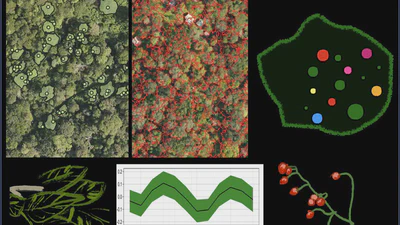
Urs Kalbitzer examines the behavioral mechanisms that link environmental variability to animal fitness, with a focus on primates. Working primarily in Kibale and other tropical field sites, he integrates long term behavioral, demographic, and population datasets with plant ecology and remote sensing.
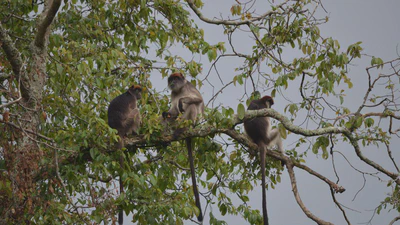
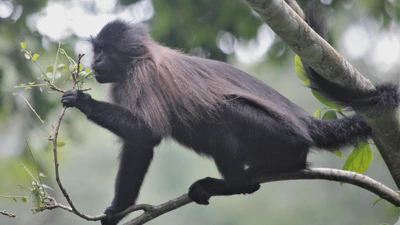
For his PhD (University of Göttingen, 2014), Urs investigated variation in male aggressiveness in baboons (Papio spp.) using field observations, endocrinology, and genetics. As a postdoc as the University of Calgary and McGill University, he analyzed long-term data to quantify the fitness trade-offs of female social integration in white-faced capuchin monkeys (Cebus imitator) and how female dispersal patterns shapes relationships in red colobus (Piliocolobus tephrosceles). At McGill, and since 2020 in Konstanz, he expanded to ecological habitat assessments – combining plant ecological and remote sensing data – to test socio-ecological hypotheses and evaluate how environmental change affects primate habitats, behavior, and survival.
Two complementary themes structure his work, linking individual behavior to population processes and environmental variability through analyses of long-term datasets and and fined-grained field measurement:
- Ecology and evolution of primate social diversity and
- Cascading effects of environmental change on primate habitats, behavior, and survival