Human-Wildlife Interactions


Project Description and Aims
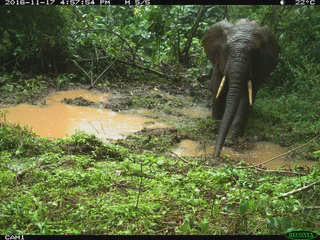
Human-wildlife conflict is one of the most pressing and complex challenges at the intersection of conservation biology and sustainable development. As human populations and agricultural lands expand into areas bordering protected habitats, interactions between people and wildlife are intensifying, often with severe consequences. Our research program addresses one of the most critical forms of this challenge: human-elephant conflict (HEC). Across Africa and Asia, crop-raiding by elephants poses a direct threat to the food security, economic stability, and safety of rural communities, which in turn can erode local support for conservation and lead to retaliatory killings of elephants.
The core aim of this long-term research is to move beyond simply documenting conflict to systematically understanding its underlying drivers. We operate on the premise that conflict events are not random; they are predictable behaviors shaped by a complex interplay of elephant ecology, animal learning, resource availability, and the structure of human landscapes. Our lab uses an interdisciplinary approach that integrates advanced geospatial science—including satellite remote sensing, GIS modeling, and spatial statistics—with rich, long-term datasets gathered through on-the-ground behavioral observations and collaboration with local community partners.
This project seeks to answer the fundamental questions of why and where conflict hotspots emerge and persist. We investigate how elephant decision-making is influenced by factors like landscape connectivity, the distribution and nutritional quality of preferred crops, the presence and effectiveness of physical barriers, and seasonal environmental changes. By identifying the specific landscape features and social-ecological dynamics that either attract elephants or fail to deter them, we can pinpoint critical vulnerabilities and opportunities for intervention.
Ultimately, the objective of this program is to provide the actionable, evidence-based science needed for effective, spatially-informed coexistence strategies. Rather than promoting one-size-fits-all solutions, our research helps conservation managers and local communities allocate limited resources to the right places. This can inform the design of smarter, more efficient mitigation tools, from the strategic reinforcement of barrier systems and the implementation of community-based early-warning systems in high-risk corridors, to informing land-use planning that better balances agricultural needs with wildlife movement. Our work strives to find sustainable pathways that protect human livelihoods while securing a future for elephant populations in increasingly human-dominated landscapes.
Contact Information
Dipto Sarkar

